
Words to Avoid in an Essay Words are powerful in...
Read MoreAppendix Writing Guide: Enhance Your Work with Clarity and Structure
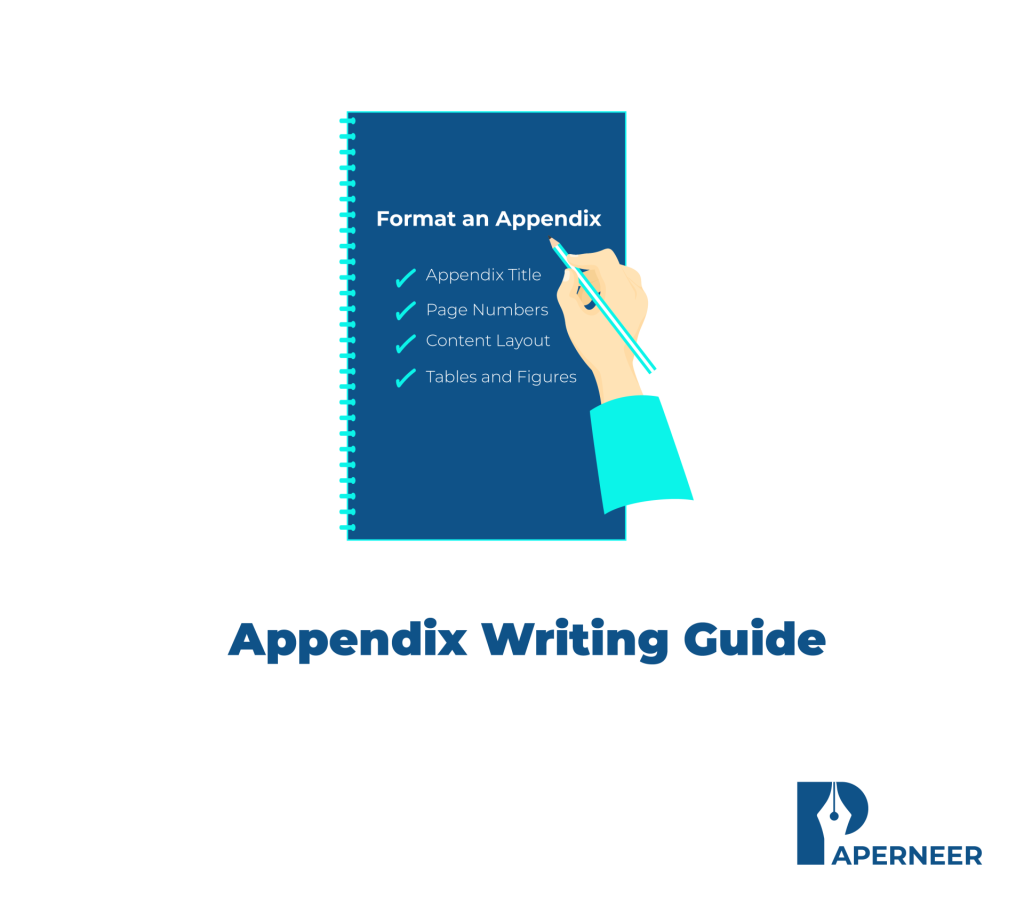
Writing an appendix will be a daunting task, mainly if you are unsure of its purpose or format. This Appendix Writing Guide is here to help! Whether or not you’re working on a search paper, report, or thesis, mastering the appendix is essential to organizing supplementary info. During this guide, you may find out how to format, structure, and embody an appendix effectively with step-by-step directions and clear examples.
In this blog brings you:
What is Appendix Writing?
An appendix may be a section at the tip of a document that contains extra data supporting the most text. It’s typically utilized in academic, technical, and business writing to provide readers with access to supplementary details that will otherwise disrupt the flow of the main narrative. Examples embody data, charts, maps, interview transcripts, or elaborate calculations.
The appendix ensures that your main document remains focused and summary while providing readers the chance to explore more details if required. In short, it enhances the quality and completeness of your work.

How to Write an Appendix?
Writing an appendix involves a clear structure and format to maintain consistency and readability. Here are the steps:
Label each Appendix
Use distinct labels for every appendix, like “Appendix A,” “Appendix B,” and so on. If your document has just one appendix, you’ll be able to label it merely as “Appendix.” make sure that the labels correspond to references created within the main text.
Organize Content Logically
Group similar forms of data along. For example, place all information charts in one appendix and interview transcripts in another. Logical organization helps readers find specific details quickly.
Include Descriptive Titles
Provide a short title or description for every appendix section. For example, “use Appendix A: Survey Questionnaire” or “Appendix B: data.” This approach adds clarity and context.
Follow formatting tips
Use consistent data formatting throughout your appendix, adhering to the citation sort of your main document (e.g., APA, MLA, or Chicago). Embody correct citations for any external sources documented within the appendix.
Refer to the Appendix in Your Main Text
Whenever you embody a chart, table, or supplementary detail within the appendix, reference it in your main text. For example, “The survey form will be found in Appendix A.”
How to Format an Appendix
Formatting an appendix needs attention to detail to confirm clarity and expertness. Follow these format guidelines:
- Title and Labels: Use a clear and consistent title, like “Appendix A” or “Appendix B,” followed by a descriptive heading.
- Font and Spacing: Match the font and spacing of your appendix to the remainder of the document for uniformity.
- Margins: Maintain commonplace document margins (usually one in. on all sides).
- Page Numbering: Continue the page list from the most recent text into the appendix.
- Order: Place the appendix at the top of the document before the list or references.
Appendix Writing Examples
An appendix in a research paper or academic work provides supplementary material that supports the most content; however, it is just too detailed or intensive to be included within the body. It will embrace charts, graphs, raw data, careful explanations, or extra resources that enhance the reader’s understanding while not interrupting the flow of the first text. Below area unit some samples of appendix content:
- Raw Data Tables: If a study involves intensive data collection, the data will be enclosed within the appendix. For example, a table listing participant responses or careful experimental measurements would seem here, permitting readers to review the info while not overwhelming the most narrative.
- Survey Questionnaires: In research involving surveys, the total form or interview script used to collect information is commonly placed within the appendix. This permits readers to look at the methodology and perceive how the info was gathered.
- Detailed Calculations: Complex calculations or formulas accustomed to deriving ends in a study will be provided within the appendix. This can be notably useful in technical papers wherever readers might have to follow the steps taken to succeed in conclusions.
- Extended Literature Reviews: Whereas an outline of connected analysis is usually enclosed within the body, a careful literature review will be bestowed within the appendix for those inquisitive about a deeper dive.
By organizing these materials within the appendix, the body remains precise and targeted, giving transparency and support for the analysis.

Common Mistakes to Avoid in Appendix Writing
When writing an appendix, it’s essential to take care of clarity, consistency, and relevance to confirm that the supplementary materials effectively support the most content. Here are some common mistakes to avoid in appendix writing guide.
1) Overloading with excess Information: One of the foremost frequent mistakes is an excessive amount of irrelevant or trivial data. The appendix should offer solely supplementary details that enhance the understanding of most of the text. Avoid overwhelming the reader with extraneous knowledge, like excessive background data or details that don’t directly contribute to your analysis.
2) Lack of Organization: Failing to structure the appendix properly will confuse the reader. It’s crucial to prepare materials logically, like grouping similar knowledge along or listing the sections systematically. For instance, if you embody many charts, label them as “Appendix A,” “Appendix B,” etc., and guarantee they’re mentioned within the main text. Scrambled appendices will make it troublesome for the reader to seek out necessary details.
3) Not Referencing the Appendix within the Main Text: Another mistake is neglecting to reference the appendix at intervals in the body of the paper. You need to direct the reader to the appendix at acceptable points within the main text. This ensures that the supplementary material is integrated seamlessly into the analysis and doesn’t seem disconnected or excessive.
4) Including Redundant Information: Avoid continuance data already provided within the main body of the paper. The appendix ought to gift new supplementary content, not duplicate what’s been mentioned earlier. For example, if you’ve already summarized the survey in most texts, the appendix will embody the complete survey form and elaborate information.
5) Not Providing Clear Titles or Descriptions: Every item within the appendix ought to have a transparent title or description that explains what it is and the way it relates to the most text. A lack of rationalization will confuse readers and make it exhausting to know the context of the fabric provided.
By avoiding these mistakes, you’ll produce a well-organized, relevant, and helpful appendix that enhances the reader’s understanding of your analysis while not detracting from the body of your work.
Conclusion
Crafting a comprehensive appendix will significantly enhance your document by providing clarity and supporting details. This Appendix Writing Guide equips you with the information and tools to form an appendix that complements your work seamlessly. By following these steps and avoiding common mistakes, you’ll be able to make sure that your appendix is skilled and valuable.
Remember, a well-structured appendix does not solely reflect your attention to detail but conjointly boosts the believability of your analysis. Use this guide as your blueprint for success!
Capstone Project: The Ultimate Guide to Grasp and Excel
Capstone Project – A Complete Guide A capstone project is sometimes the...
Read More
Say goodbye to Mistakes in Term Papers
Avoid Errors in Term Papers Writing a theme may be a vital tutorial task that needs careful designing and...
Read More